Blog/Is NACS compatible with bidirectional charging?
V2X
Is NACS compatible with bidirectional charging?
| Justin Mulfati
The first question that came to mind when our forward-thinking readers saw headlines claiming that Tesla had apparently won the charging war centered around compatibility with bidirectional charging functions like vehicle-to-home (V2H) and vehicle-to-grid (V2G) power flow.
Does the adoption of the “North American Charging Standard” (NACS) equate to a step backward in the development of two-way charging?
The answer is a resounding no – because NACS is simply CCS in disguise.
Quick take: Connector and protocol are distinct
The NACS is a CCS charger at its core: both adhere to ISO 15118 and DIN 70121 – the protocols that serve as the foundation for next-generation EV charging. This means that NACS is compatible with bidirectional charging.
The NACS connector is physically smaller, combining the same two primary pins for both AC and DC charging.
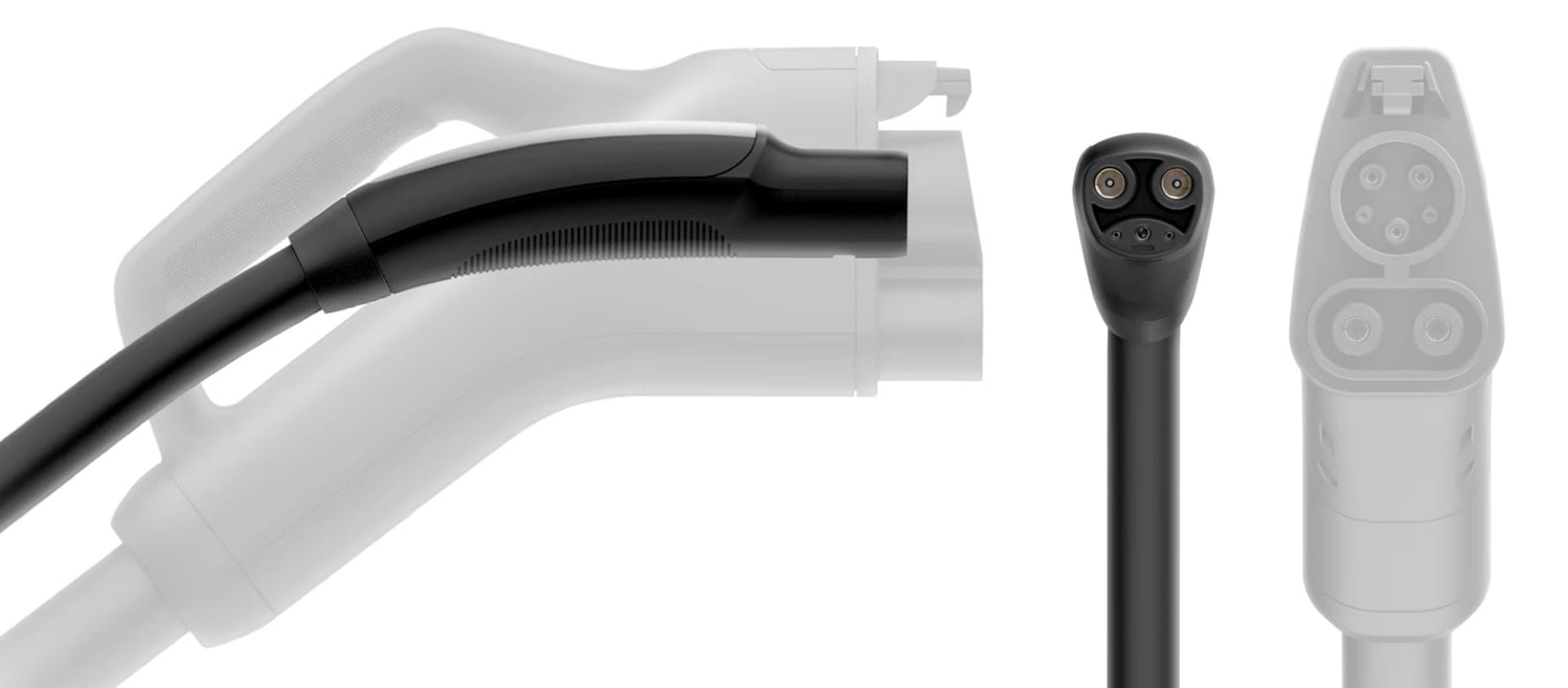
Drivers can use an adapter to switch between the two connector styles at public charging stations.
There are small technical differences with the NACS setup. Unlike CCS, the NACS connector does not have a locking mechanism that activates while charging. Also, access to the charging inlet is granted by a UHF radio chip.
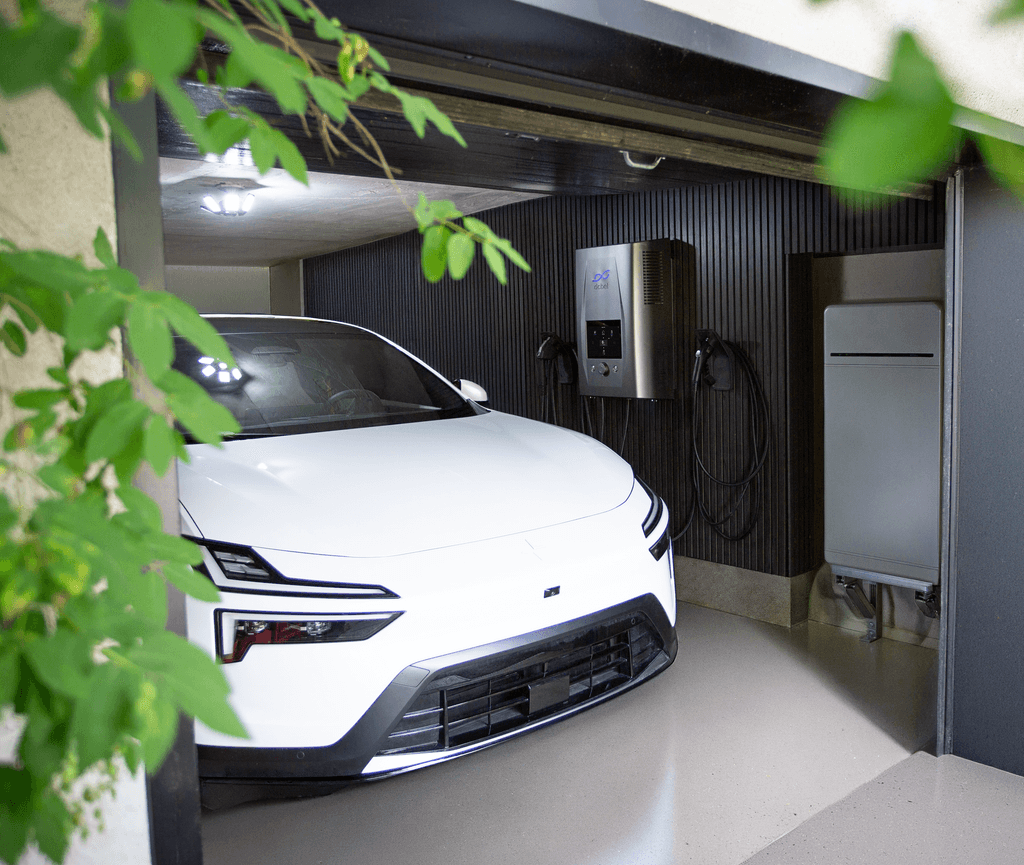
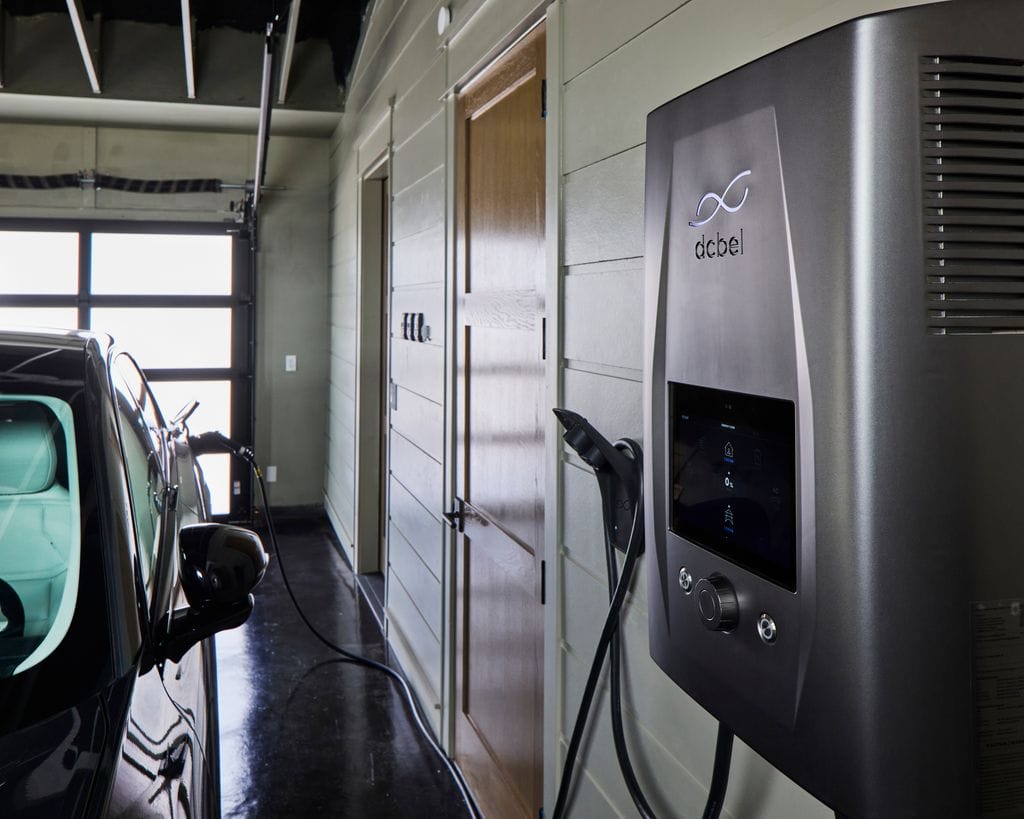
But the charging protocol itself remains identical. dcbel customers can order their Home Energy Station with the connector that goes with their current vehicle, whether it’s CCS, CHAdeMO or NACS, and swap it out when they change their EV.
How NACS came to challenge CCS
The news that Ford, GM, Rivian and Volvo will be pivoting to the NACS connector serves as a reminder that things change quickly in the maturing world of EVs.
After all, it’s not the first time an automaker has placed their bets on a different connector spec: consider when Nissan announced they would outfit their next flagship EV with CCS connectors instead of CHAdeMO.
The impetus for this sort of decision is to allow drivers to access the most complete charging network. If convenience is indeed paramount, the NACS news should come as no shock. From a sheer numbers perspective, Tesla’s dominance in EV sales combined with its ubiquitous network of Supercharging stations put NACS squarely in the lead. According to the Department of Energy, there are 30,000 Tesla public charging ports in the US compared to less than 10,500 CCS ports.
But until Ford became the first OEM to announce their endorsement of NACS, CCS was shaping up to be the only connector style most drivers needed to worry about – especially those looking for future-proof bidirectional compatibility.
According to the Department of Energy, there are 30,000 Tesla public charging ports in the US compared to less than 10,500 CCS ports.
As we mention in our free whitepaper, the communication protocols governing CCS chargers were evolving to a point where native interoperability between bidirectional EVs, EVSE and energy management systems was a given.
Meanwhile, Tesla’s connector was considered a proprietary standard, and the carmaker showed little interest in bidirectional EV charging.
The turning point came in late 2022 when Tesla renamed its solution to NACS and opened the standard to other EV manufacturers. By May 2023, Ford announced that NACS inlets would be built into its vehicles beginning in 2025. In June, GM, Rivian and Volvo made similar statements.
Initial reactions to NACS news
Charging Interface Initiative (CharIN), the association that oversees CCS interoperability, expressed concern over the fact that member organizations like ISO, IEC, and IEEE never had a chance to formally review NACS. In CharIN’s view, while the incorporation of DIN 70121 and ISO 15118 is a good thing, Tesla’s solution cannot be considered a standard until it is submitted to standards bodies.
Two weeks after CharIN made its statement, SAE International announced it would standardize NACS on an expedited timeframe. The process is “intended to assure reliable and consistent performance for any EV model or charging network.”
Another item of interest for road warriors constantly on the hunt for the most powerful Level 3 chargers: Tesla’s Superchargers currently max out at 500 volts / up to 250 kW. Many automakers have 800V battery architecture in their sights, with some having adopted it already in their EVs. Only these 800V vehicles can extract the full benefit of “Hyper-Fast” 350 kW CCS chargers. It remains to be seen if the NACS rollout will affect the global transition to 800V vehicles.
Standardizing [NACS] is “intended to assure reliable and consistent performance for any EV model or charging network.”
Tesla’s next Supercharger model, the V4, is rated at 1,000 volts and can theoretically pump out 615 kW of power. The only V4 in operation today is in the Netherlands.
Interoperability is second-to-none
Interoperability is a key theme in the burgeoning EV market, seen everywhere from California’s SB-233 legislation to the NACS saga. dcbel takes interoperability to heart by designing products that are compatible with all EVs, thereby putting people at the center of their home energy management.