Why solar alone doesn’t future-proof your home | dcbel
Solar
Why solar alone doesn’t future-proof your home
| Christopher DeWolf
Solar can lower your bills — but what happens when rates spike after sunset, the grid goes down, or your extra daytime power is worth less than you expected?
Solar has already changed what it means to own a home. Your roof once sat there absorbing heat; it can now produce clean electricity, lower your utility bills and give you a more active role in how your energy is made and used. That’s a real transformation — and it is still accelerating. The US solar industry installed 43 GW of new capacity in 2025, keeping solar the country’s leading source of new power capacity for the fifth year in a row.
But the future of your home’s energy isn’t about solar alone. It will be determined by how well your panels connect to everything else: batteries, EVs, appliances, utility rates, demand response programs and the grid itself.
Put another way, solar is no longer the destination: it’s the first step. The next step is making sure your home knows when to use that power, when to store it and when to save it for later.
Solar incentives are changing — but the opportunity is not gone
The federal Residential Clean Energy Credit — the 30% tax credit that helped millions of Americans install solar, batteries and other clean energy upgrades — is no longer available for property placed in service after December 31, 2025. That doesn’t mean the solar opportunity has disappeared. It means homeowners need to think more strategically.
There are still many incentives available, but they vary by state, utility and technology. New York’s NY-Sun program continues to support solar through incentives, financing and contractor resources, while solar projects compensated under the state’s Value Stack may also be eligible for NYSERDA incentives. Massachusetts has moved forward with SMART 3.0, including a 2026 incentive structure for small solar generation units. Connecticut’s Energy Storage Solutions program offers incentives for residential and commercial battery storage, showing how storage is becoming a grid asset, not just a backup device.
What has changed is how solar energy is valued. Just look at what’s happening in California; older net metering tariffs credited exported solar at retail rates, but those tariffs are closed to new enrolments. Under the newer structure, solar paired with storage is much more compelling: the CPUC estimated that average residential customers with solar plus batteries would save more each month than solar-only customers.
Sequoya Cross, VP of Energy Storage for Briggs & Stratton and a member of the California Solar & Storage Association's board of directors, puts it plainly when we ask for her advice: “[Homeowners] should be installing batteries, because there isn’t a lot of benefit for just having solar anymore from a net metering standpoint.”
The key is not simply having a battery in the garage, rather it’s using that battery every day to offset utility charges. “Depending on the size of the battery bank and how much load you’re offsetting, you can still get the same payback time as you could with net metering,” Cross tells us.
Your home battery stores excess solar energy for use after sunset, during outages, or when utility rates rise.
That’s the new solar equation. If exporting electricity to the grid is less lucrative, the smartest move is to use more of your own solar at home. Store it. Shift it. Charge your EV with it. Save it for peak-rate hours. Keep it available for outages. Participate in grid programs when the timing makes sense.
That’s not only true in California: it applies to homeowners across the nation. Texas has become one of the country’s most important solar markets, with solar on track to surpass coal in power generation in 2026. But Texas does not have one simple statewide net metering structure for homeowners; in deregulated areas, solar buyback value depends on the retail electricity plan. In New England, rooftop solar is already reshaping the grid: ISO New England reported a record-low demand day in April 2025, when behind-the-meter solar helped push grid demand down to 5,318 MW before demand rose again later in the day.
[Homeowners] should be installing batteries, because there isn't a lot of benefit for just having solar anymore from a net metering standpoint.
This is the “duck curve” in action: solar floods the system with clean power during the day, then fades just as homes need more electricity in the evening. The solution is not less solar, but better coordination. The goal is to use the power you already produce at the moments when it helps you most.
Solar does one thing beautifully: it generates power. But it does not decide what to do with that power. It does not know whether your EV needs to be ready by 7am, whether electricity will be expensive at 6pm, whether a storm is coming, whether your home battery should charge now or wait, or whether it makes more sense to run your heat pump while the sun is still shining.
That’s where the private grid comes in.
The new goal: use more of your own power
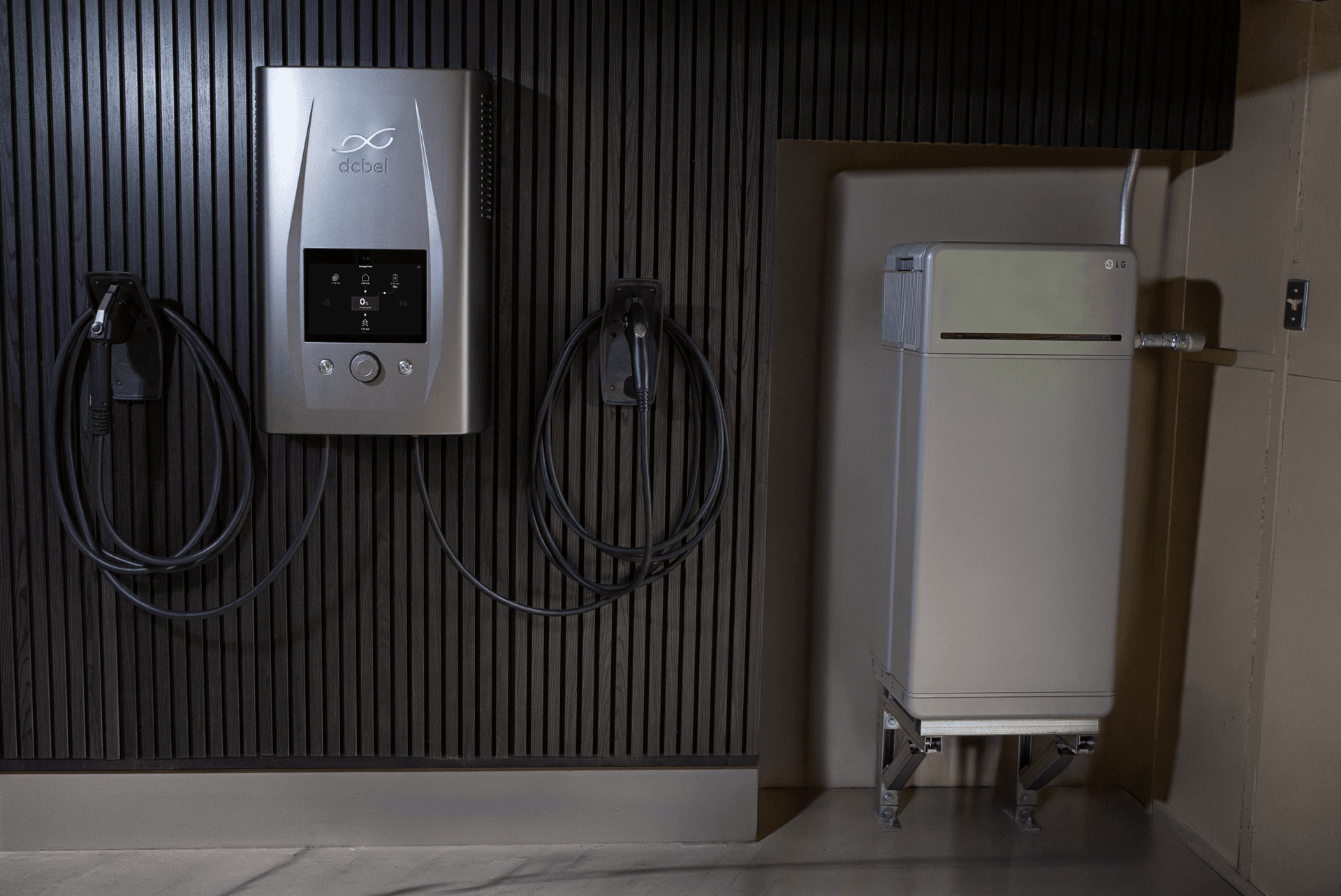
A private grid is about giving your home the ability to generate, store, use and exchange energy without you needing to fuss over it. Solar generates electricity, your home battery stores it, and your EV is both a mode of transportation and a reserve of backup power. Smart load management decides what matters most, and an integrated energy management system coordinates everything in the background.
Cross says this is where homeowners need help in learning more about their options. “Anyone that’s going to be putting in a battery system should be thinking about what essential loads they want to back up,” she says. She also warns against assuming that whole-home backup is automatically enough to run everything indefinitely. “You should either have some form of smart load management that is actively allowing the homeowner to choose and prioritize the load.”
You can enjoy a warm evening dinner outdoors powered your very own smart home energy management system.
That point is crucial. Backup isn’t just about how much energy you have, but how well you use it.
The same applies to EVs. A conventional EV charger treats the car as another load. A bidirectional charger turns it into a battery on wheels. When connected to solar, storage and smart controls, the EV can become part of the home energy system — charging when solar is abundant, supporting the home during outages and eventually participating in virtual power plants or demand response programs.
Backup isn't just about how much energy you have, but how well you use it.
None of this should require homeowners to become energy traders. The future of home energy is all about effortless control -- not a dozen apps, separate devices and manual decision-making.
The future is automatic, not complicated
That’s the idea behind dcbel Ara. With Ara, homeowners do not have to decide minute by minute whether solar should power the house, charge the EV, fill the battery or wait for peak-rate hours. Ara connects those pieces and manages the decisions automatically. dcbel’s Orchestrate OS is designed to learn household energy patterns, schedule EV and backup battery charging, and make real-time decisions that support cost savings, outage defense and battery protection.
For homeowners, that means solar can finally become more than a panel array: it becomes the power source for your very own smart energy network.
So if you are thinking about solar, don’t ask only how many panels you can fit on your roof --ask what your home can become:
· Can it store excess energy instead of exporting it cheaply?
· Can it charge your EV from the sun?
· Can it keep essential loads running during an outage?
· Can it respond to utility rates automatically?
· Can it adapt as incentives, tariffs and grid programs evolve?
Solar can finally become more than a panel array: it becomes the power source for your very own smart energy network.
Solar is one of the best upgrades a homeowner can make, but the homes that get the most from solar will be the ones that treat it as the beginning of something bigger:
having a home that knows when to use solar, when to store it and when to protect you from the grid — without asking you to manage every decision yourself.